Checquy’s Policy of Recruiting Children with Special Abilities
The RookThe Checquy’s Policy of Recruiting Children with Special Abilities turns childhood into an institutional pipeline: the Checquy identifies people with powers, brings them into its service, and trains them to defend a public that is not told the organization exists. The practice is justified by supernatural dangers and the state’s claimed authority, but its methods range from inducements and family pressure to forcible removal. The Estate’s classrooms and examinations make the policy’s central tension visible: care and education are offered within a system that also classifies, disciplines, and claims its pupils.
Authority and Recruitment
The Checquy has long been authorized to claim citizens it wants, and its recruitment methods vary with age and circumstance. Parents may be coerced or deceived into releasing children, sometimes in exchange for substantial payments. Adults with powers are instead lured by promises of wealth, influence, and service to the nation. Initiation combines ancient oaths with modern contracts and secrecy obligations; by the time a recruit becomes a full member, many overlapping ties bind that person to the organization. The system therefore does more than find operatives: it makes departure difficult by enclosing service in legal, institutional, and social obligations.
The policy is defended as a response to threats that ordinary people cannot be allowed to know about. The Checquy’s intelligence network gathers information through government contacts and discreet briefings, while its analysts search large volumes of reports for signs of supernatural activity. Its secrecy is carefully maintained: the organization’s name does not appear outside its own records, information reaches it through indirect channels, and its computer network is isolated from external systems. Child recruitment belongs to this larger machinery of protection, but the machinery’s secrecy also limits public scrutiny of how children are obtained and trained.
The Estate: Training and Assessment
Gifted children brought into the Checquy are educated at the Estate for a life of service. The curriculum joins conventional academic subjects, including classics and chemistry, with practical instruction such as field-stripping rifles. Routine, physical preparation, and powers training are coordinated around the institution’s aim of producing effective adult operatives. In the account of one pupil’s arrival, even lunch is subordinated to a medical regimen: pills are administered in preparation for testing, and the day’s lessons are repeatedly interrupted by their effects.
Medical examination is not an initial formality but an ongoing practice. At the sanatorium, staff photograph and scan pupils, record bodily data, take samples, and assess physical and mental conditions. The institution also responds to findings: one pupil receives a new haircut and glasses, has dental work arranged, and is assigned a strength-training plan; discovered allergies and phobias lead to further attention, including therapy. The examination turns a child into a detailed institutional record, while the staff’s stated purpose is to understand and prepare that child for service.
The Estate repeats its medical testing monthly for every pupil, hoping to discover the sources of abilities that often resist explanation. One boy’s power is associated with atmospheric phenomena in Iceland, though the relationship remains too complex for staff to understand; another describes sensing the emotional state of left-handed people around the world. Even when the researchers cannot explain what they measure, they preserve the data in the hope that future Checquy personnel will interpret it. Training follows a similar logic: instructors help pupils explore their powers, although they may be unable to perform or fully understand those abilities themselves.
The account does not present the Estate simply as a place of unchecked harshness. Its administrators are described as careful not to push pupils beyond what they can bear, on the grounds that excessive pressure would undermine the capable adults they want to produce. Yet the training is intensive, and the institution’s efficiency extends to the children themselves. The combination of measured care and comprehensive preparation makes the policy more complicated than a straightforward account of punishment: the pupils are supported, but support is organized around making them useful to the Checquy.
A Colonial Precedent: The Croatoan
The recruitment system takes a particularly stark form in the colonial organization known as the Croatoan. Richard Swansea’s American operation was expected to record supernatural entities and events across the colonies, suppress threats where possible, and send captured threats to England for examination. Its small outposts and limited resources made the work difficult. Unlike the Checquy in Britain, the Croatoan could not depend on government authority to acquire children, while the religious character of the colonies made disclosure of supernatural abilities dangerous.
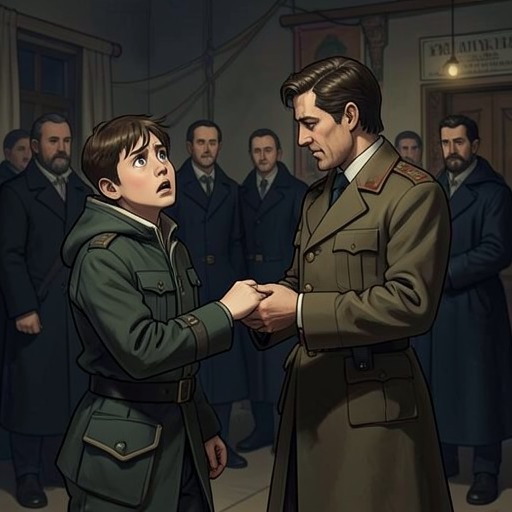
In response, the Croatoan recruited children through more than one route. Some families agreed to apprentice their children to prominent local tradesmen, allowing them to enter the organization with comparatively little resistance. When parents were less willing, Swansea and his operatives seized children from the streets or took them from their beds, then sent them to another colony. There they received new identities, education, and trade training, alongside instruction in the Checquy mission as represented by the Croatoan. The operation framed their service as protection of their community, but the children’s removal and renaming show how that protective purpose could be imposed rather than chosen.
The Croatoan also relied on adult recruits and reinforcements from the Checquy. Swansea rescued people who manifested powers and were at risk of execution as witches, then attempted to re-educate and recruit them. The organization also screened and purchased enslaved people, granting them freedom upon entry; some operatives objected to their equality, but the protests subsided when the new recruits proved highly capable. These adult recruitment practices differ from child acquisition, yet they belong to the same effort to assemble a force under conditions where conventional authority could not be relied upon.
Choice, Cost, and the Operative’s Life
The policy’s ethical difficulty is stated plainly when Myfanwy’s friend Shantay objects to the Checquy taking children from their parents. Myfanwy answers that people with powers are treated as the nation’s property. Shantay contrasts this with her own childhood in the American supernatural service: her parents had a choice and the recruitment offer came from an expensive New Hampshire boarding school, with tuition, room, and board provided. Myfanwy questions whether this alternative is genuinely more ethical, but the difference in parental consent remains decisive. The exchange exposes a disagreement not over whether young people are trained for service, but over who gets to decide that they will be.
The consequences continue into adulthood. The Checquy’s systematic acquisition of gifted children has left few powered operatives with families of their own. The Estate’s rigorous training and deliberate focus on the mission leave its graduates poorly equipped for personal lives, while dating within the organization is difficult for people raised together. Myfanwy describes her own discomfort with intimacy as an extreme instance of this broader effect. The policy thus shapes more than a recruit’s occupation: by organizing childhood around duty, it influences the relationships its graduates can form later.
That shaping begins before a pupil can meaningfully consent to a vocation. The Checquy’s claim over gifted citizens, the Estate’s comprehensive observation, and the promise that service protects the public all reinforce one another. The result is an institution that can provide education, training, and a sense of mission while also treating children as resources to be collected for the nation. Its policy is therefore both the foundation of the Checquy’s supernatural workforce and a measure of the cost built into its model of protection.